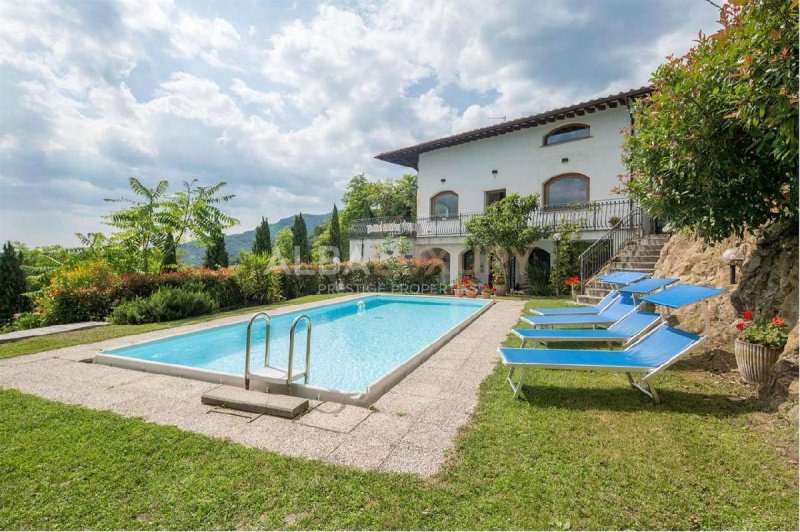
Wonderful villa located in Tuscany in Pescia, near Montecatini Terme and Lucca.
The property consists of 4 residential units which have already been divided up, or can be used as a single independent property.
Property Description A SQM 330
Description Property B SQM 110
Description of Property C SQM 240
Description of Property D SQM 112
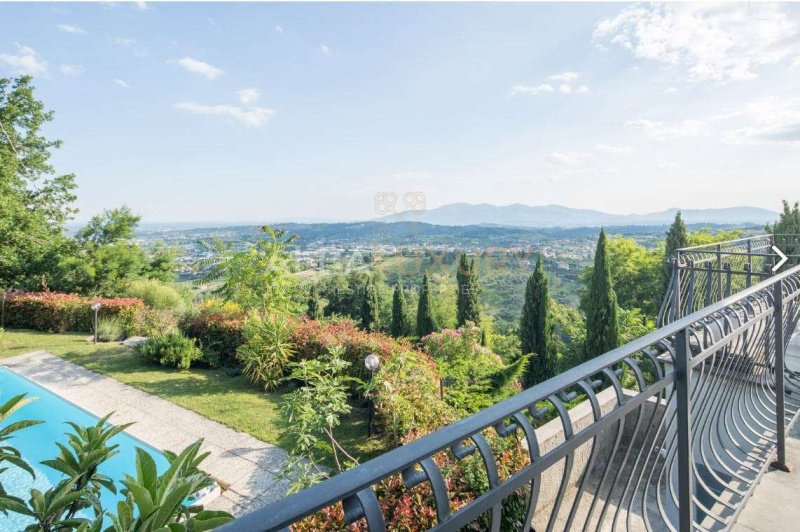
The property offers an enchanting view over the city of Pescia and the plain between Pistoia and Lucca and is composed of a staircase of 10 gardens which lead to a large terrace which offers an enchanting view over the garden which boasts 30,000 sqm.
The property complex consists of several units:
1. Independent villa on three levels, private garden and swimming pool.
2. Independent living unit located on the ground floor as part of the first building.
3. Farmhouse on three floors, panoramic veranda, the ground floor offers a large tavern room.
4. Residential unit on two levels.
The beauty and vastness of the structure allow it to be used for private use or for tourist accommodation.
It is therefore considered an enchanting villa immersed in an extraordinary landscape of olive groves and woods.
Territory:
The town of Pescia has ancient medieval origins; divided by the river, it is clearly distinguished by two urban sectors: that of the Cathedral and that of the Palazzo Comunale, where the large square extends.
The city of Pescia has ancient medieval origins; divided by the river, it is clearly distinguished by two urban sectors: the Cathedral and the Palazzo Comunale, where the large square extends. Ancient palaces and elegant churches characterise the historical centre, which, despite having undergone considerable interventions, still possesses its original shape. To the east is the circular urban core that originated from the Pieve di S. Maria, today the Cathedral; to the west, on the other hand, the nucleus of the civitas, with the square and the palaces of the municipal representatives, develops with a singular longitudinal urban design; the latter originated from the castle of Pescia, which in the Middle Ages was under the jurisdiction of the Bishop of Lucca. The Ponte del Duomo unites these two poles so clearly divided, the 'religious and the civil'. Pescia, precisely because of its urban layout and eventful history, has since time immemorial been considered the capital of the Valdinievole. Rich in documentary and artistic evidence, Pescia still appears today as a fascinating place where one can spend days amidst the surrounding green hills and characteristic streets that tell of a centuries-old tradition and history. The earliest images of Pescia date back to the 15th century and emphasise the two posts (castle-pieve) and the steep hill that descends towards the river. In 1339 the castle of Pescia, after a centuries-long history under the rule of Lucca, came under Florence. On 6 February 1339, the Florentines entered Pescia and from that moment on, the community followed the fate of the 'lily' government. Although almost all the large church structures have a medieval foundation, they underwent major architectural and decorative alterations in the 17th and 18th centuries. In the 17th century, in fact, Pescia experienced its best artistic and political season; the community began to have a more citizen-like structure; the small institutions, which up to that time had had a more family-like character, began, so to speak, to become real services for local society. The municipality of Pescia covers a territorial surface area of 79.14 km2. Its main centres of tourist attraction are the Valleriana Castles and the village of Collodi, which is world famous because the author of the Adventures of Pinocchio wanted to be named after it. Today, the town of Pescia is known for its floricultural production and as the commercial centre for flowers in Central Italy.
Språk från vilket den automatiska översättningen genererades
Meravigliosa villa locata in Toscana a Pescia, vicino a Montecatini Terme e Lucca.
La proprietà è composta da 4 unità abitative già frazionate, oppure puó essere destinata ad un unica proprietà indipendente.
Descrizione Immobile A MQ. 330
Descrizione Immobile B MQ. 110
Descrizione Immobile C MQ. 240
Descrizione Immobile D MQ. 112
La proprietà propone un'incantevole vista sulla città di Pescia e sulla pianura tra Pistoia e Lucca è composta da una scalinata di 10 giardini che conducono ad una grande terrazza che offre un'incantevole vista sul giardino che vanta 30.000 mq.
Il complesso immobiliare composto da diverse unità:
1. Villa indipendente disposta su tre livelli, giardino privato e piscina.
2. Unità abitativa indipendente situata al piano terra parte del primo edificio.
3. Casa colonica disposta su tre piani, veranda panoramica, al piano terra propone un ampio locale taverna.
4. Unità abitativa su due livelli.
La bellezza e la vastità della struttura le consentono un uso privato oppure un utilizzo turistico ricettivo.
Considerata dunque un'incantevole villa immersa in un paesaggio straordinario composto da oliveti e boschi.
Territorio:
La città di Pescia ha antiche origini medievali; divisa dal fiume, è nettamente contraddistinta da due settori urbani: quello della Cattedrale e quello del Palazzo Comunale, ove si estende la grande piazza.
La città di Pescia ha antiche origini medievali; divisa dal fiume, è nettamente contraddistinta da due settori urbani: quello della Cattedrale e quello del Palazzo Comunale, ove si estende la grande piazza. Antichi palazzi ed eleganti chiese caratterizzano il centro storico che, nonostante abbia subito notevoli interventi, possiede ancora la sua forma originaria. Ad est è il nucleo urbano di forma circolare che prese origine dalla Pieve di S. Maria, oggi Cattedrale; ad ovest invece si sviluppa con un singolare disegno urbano longitudinale il nucleo della civitas, con appunto la piazza ed i palazzi delle rappresentanze comunali; quest'ultimo ebbe origine dal castello di Pescia che in età medievale era sotto la giurisdizione del Vescovo di Lucca. Il Ponte del Duomo unisce questi due poli così nettamente divisi, il “religioso e il civile”. Pescia, proprio per il suo assetto urbano e per la sua storia ricca di avvenimenti, è da tempo immemorabile considerata il capoluogo della Valdinievole. Ricca di testimonianze documentarie ed artistiche, Pescia appare ancora oggi un luogo affascinante dove si possono trascorrere giorni tra i verdi colli circostanti e le caratteristiche strade che raccontano una tradizione e una storia plurisecolare. Le prime immagini di Pescia risalgono al Quattrocento e mettono in risalto le due postazioni (castello-pieve) e la collina ripida che scende proprio verso il fiume. Nel 1339 il castello di Pescia, dopo una storia plurisecolare sotto il dominio lucchese, passó sotto Firenze. Il 6 febbraio 1339 i fiorentini entrarono in Pescia e da quel momento la comunità seguì le sorti del governo del “giglio”. Le grandi strutture chiesastiche, pur avendo quasi tutte una fondazione medievale, hanno subito forti rimaneggiamenti architettonici e decorativi nel Sei-Settecento. Nel XVII secolo, infatti, Pescia conobbe la sua stagione artistica e politica migliore; la comunità inizió ad avere un assetto più cittadino; le piccole realtà istituzionali, che fino a quel momento avevano avuto un carattere più famigliare, iniziarono, per così dire, a diventare veri e propri servizi per la società locale. Il Comune di Pescia si estende su una superficie territoriale di 79,14 Km2. I suoi centri di maggiore attrazione turistica sono i Castelli della Valleriana e il paese di Collodi che è famoso in tutto il mondo perché l'autore delle Avventure di Pinocchio volle chiamarsi con il nome di questo paese. Oggi la città di Pescia è nota per la produzione florovivaistica e per il centro di commercializzazione dei fiori dell'Italia Centrale.
CLASSE ENERGETICA: D 121,11 kWh/m3 a
Wunderschöne Villa in der Toskana in Pescia, in der Nähe von Montecatini Terme und Lucca.
Die Liegenschaft besteht aus 4 Wohneinheiten, die bereits aufgeteilt sind, oder als eigenständige Liegenschaft genutzt werden können.
Beschreibung A SQM 330
Beschreibung Eigenschaft B SQM 110
Beschreibung der Eigenschaft C SQM 240
Beschreibung der Eigenschaft D SQM 112
Das Anwesen bietet einen bezaubernden Blick auf die Stadt Pescia und die Ebene zwischen Pistoia und Lucca und besteht aus einer Treppe von 10 Gärten, die zu einer großen Terrasse führen, die einen bezaubernden Blick auf den Garten bietet, der 30.000 qm groß ist.
Der Immobilienkomplex besteht aus mehreren Einheiten:
1. Unabhängige Villa auf drei Ebenen, privater Garten und Schwimmbad.
2. Unabhängige Wohneinheit im Erdgeschoss des ersten Gebäudes.
3. Bauernhaus auf drei Etagen, Panorama-Veranda, bietet das Erdgeschoss eine große Taverne Zimmer.
4. Wohneinheit auf zwei Ebenen.
Die Schönheit und Weite des Bauwerks ermöglicht die Nutzung für den privaten Gebrauch oder als Touristenunterkunft.
Es handelt sich also um eine bezaubernde Villa, die in eine außergewöhnliche Landschaft mit Olivenhainen und Wäldern eingebettet ist.
Territorium:
Die Stadt Pescia hat antike mittelalterliche Ursprünge; sie wird durch den Fluss geteilt und unterscheidet sich deutlich durch zwei städtische Bereiche: den der Kathedrale und den des Palazzo Comunale, wo sich der große Platz erstreckt.
Die Stadt Pescia hat antike mittelalterliche Ursprünge; sie wird durch den Fluss geteilt und zeichnet sich durch zwei städtische Bereiche aus: den Dom und den Palazzo Comunale, wo sich der große Platz erstreckt. Antike Paläste und elegante Kirchen prägen das historische Zentrum, das trotz erheblicher Eingriffe seine ursprüngliche Form bewahrt hat. Im Osten befindet sich der kreisförmige Stadtkern, der aus der Pieve di S. Maria, der heutigen Kathedrale, hervorging; im Westen hingegen entwickelt sich der Kern der civitas mit dem Platz und den Palästen der städtischen Repräsentanten mit einem einzigartigen längsgerichteten Stadtgrundriss, der aus der Burg von Pescia hervorging, die im Mittelalter der Gerichtsbarkeit des Bischofs von Lucca unterstellt war. Die Ponte del Duomo vereint diese beiden so klar getrennten Pole, den "religiösen und den zivilen". Pescia gilt seit jeher als Hauptstadt der Valdinievole, gerade wegen seiner urbanen Struktur und seiner wechselvollen Geschichte. Reich an dokumentarischen und künstlerischen Zeugnissen, ist Pescia auch heute noch ein faszinierender Ort, an dem man inmitten der grünen Hügel und charakteristischen Straßen, die von einer jahrhundertealten Tradition und Geschichte erzählen, Tage verbringen kann. Die frühesten Abbildungen von Pescia stammen aus dem 15. Jahrhundert und betonen die beiden Pfosten (castle-pieve) und den steil zum Fluss abfallenden Hügel. Im Jahr 1339 kam die Burg von Pescia nach einer jahrhundertelangen Geschichte unter der Herrschaft von Lucca zu Florenz. Am 6. Februar 1339 marschierten die Florentiner in Pescia ein, und von da an folgte die Gemeinde dem Schicksal der "Lilien"-Regierung. Obwohl fast alle großen Kirchenbauten auf mittelalterlichen Fundamenten beruhen, wurden sie im 17. und 18. Jahrhundert architektonisch und dekorativ stark umgestaltet. Im 17. Jahrhundert erlebte Pescia in der Tat seine beste künstlerische und politische Zeit; die Gemeinde begann, eine bürgerlichere Struktur zu haben; die kleinen Institutionen, die bis dahin eher familiären Charakter hatten, begannen sozusagen, echte Dienste für die lokale Gesellschaft zu werden. Die Gemeinde Pescia erstreckt sich über eine Fläche von 79,14 km2. Die wichtigsten touristischen Anziehungspunkte sind die Valleriana-Schlösser und das Dorf Collodi, das weltberühmt ist, weil der Autor der Abenteuer von Pinocchio seinen Namen danach benannt haben wollte. Heute ist die Stadt Pescia für ihre Blumenproduktion und als Handelszentrum für Blumen in Mittelitalien bekannt.
Замечательная вилла расположена в Тоскане в Пешии, недалеко от Монтекатини Терме и Лукки.
Недвижимость состоит из 4 жилых единиц, которые уже разделены, или могут быть использованы как единая независимая собственность.
Описание недвижимости A SQM 330
Описание Свойство B SQM 110
Описание недвижимости C SQM 240
Описание недвижимости D SQM 112
С участка открывается чарующий вид на город Пешиа и равнину между Пистойей и Луккой. Он состоит из лестницы из 10 садов, которые ведут к большой террасе, откуда открывается чарующий вид на сад площадью 30 000 кв.м.
Имущественный комплекс состоит из нескольких единиц:
1. Независимая вилла на трех уровнях, частный сад и бассейн.
2. Независимый жилой блок, расположенный на первом этаже в составе первого здания.
3. Фермерский дом на трех этажах, панорамная веранда, на первом этаже находится большой зал таверны.
4. Жилой блок на двух уровнях.
Красота и простор сооружения позволяют использовать его для частного использования или для размещения туристов.
Поэтому она считается очаровательной виллой, погруженной в необыкновенный ландшафт оливковых рощ и лесов.
Территория:
Город Пешиа имеет древние средневековые корни; разделенный рекой, он четко выделяет два городских сектора: сектор Кафедрального собора и сектор Палаццо Комунале, где простирается большая площадь.
Город Пешиа имеет древние средневековые корни; разделенный рекой, он четко выделяет два городских сектора: Кафедральный собор и Палаццо Комунале, где простирается большая площадь. Старинные дворцы и элегантные церкви характеризуют исторический центр города, который, несмотря на значительные вмешательства, все еще сохраняет свой первоначальный облик. На востоке находится круговое городское ядро, возникшее из Пьеве ди Санта Мария, где сегодня находится кафедральный собор; на западе, с другой стороны, развивается ядро civitas, с площадью и дворцами муниципальных представителей, с необычной продольной городской планировкой; последняя возникла из замка Пешиа, который в средние века находился под юрисдикцией епископа Лукки. Понте дель Дуомо объединяет эти два полюса, так четко разделенные, "религиозный и гражданский". Пеша, именно благодаря своей городской планировке и богатой событиями истории, с незапамятных времен считается столицей Вальдиниеволе. Богатая документальными и художественными свидетельствами, Пеша и сегодня предстает как увлекательное место, где можно провести несколько дней среди окружающих зеленых холмов и характерных улочек, рассказывающих о многовековых традициях и истории. Самые ранние изображения Пешии относятся к 15 веку и подчеркивают два столба (замок-пьеве) и крутой холм, спускающийся к реке. В 1339 году замок Пешиа, после многовековой истории под властью Лукки, перешел под власть Флоренции. 6 февраля 1339 года флорентийцы вошли в Пешию, и с этого момента общину постигла участь правительства "лилии". Хотя почти все крупные церковные сооружения имеют средневековую основу, они претерпели значительные архитектурные и декоративные изменения в XVII и XVIII веках. В XVII веке Пеша пережила свой лучший художественный и политический сезон; сообщество стало иметь более гражданскую структуру; небольшие учреждения, которые до этого времени имели более семейный характер, стали, так сказать, настоящими службами для местного общества. Территория муниципалитета Пешиа составляет 79,14 км2. Главными центрами туристической привлекательности являются замки Валлерианы и деревня Коллоди, которая всемирно известна тем, что автор "Приключений Пиноккио" хотел, чтобы ее назвали в его честь. Сегодня город Пешиа известен своим цветоводческим производством и как коммерческий центр цветов в Центральной Италии.